
Why Are My Gums Bleeding? (It’s Likely Not a Cavity)
When you see “pink in the sink” after brushing your teeth, your first thought might be that you have a cavity or that you brushed too hard. However, persistent bleeding is often a red flag for something else entirely: Periodontitis.
Many patients are surprised to learn that gum bleeding isn’t usually caused by tooth decay. Instead, it is the result of gum disease. Here is what you need to know about what is happening below the gumline, why it’s dangerous, and how we can treat it.
The Root Cause: It’s Not Just Plaque
It starts with dental plaque. If not cleaned properly, plaque hardens into dental calculus (tartar). Unlike plaque, you cannot brush tartar off; it adheres firmly to the teeth.
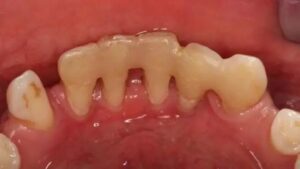
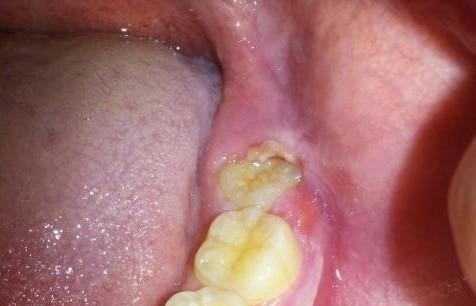
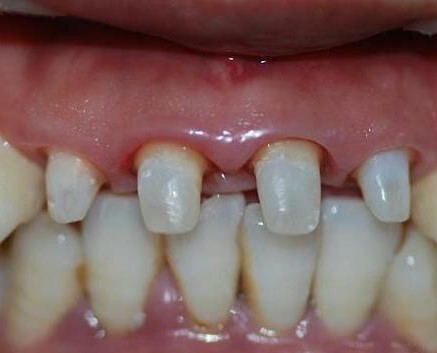
As this calculus builds up, it presses against your gums, causing the gingival papilla (the triangle of gum between your teeth) to swell. Over time, the calculus pushes deeper, invading the space between the tooth and the gum to form periodontal pockets.
Why does it bleed?
When calculus presses on the gums, the tissue becomes hyperemic (filled with excess blood) and extremely sensitive.
- Acute attacks: You may feel pain or notice gum recession (gums pulling back).
- Mechanical irritation: Because the gums are inflamed, the friction from toothbrush bristles causes them to bleed easily.
Note on Brushing: Never brush your teeth horizontally (back and forth in a sawing motion). This irritates the gums further and causes more bleeding. Instead, use a soft-bristled brush and gentle circular motions to minimize plaque accumulation without damaging the tissue.
The Hidden Dangers of Periodontitis
If left untreated, gingivitis (mild gum inflammation) evolves into chronic periodontitis. This is dangerous because it is often a “silent” disease—it may not hurt even as it worsens.
As the calculus and bacterial toxins invade deeper, they begin to destroy the foundation of your teeth:
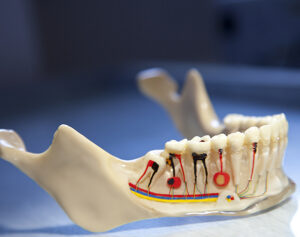
- Bone Loss: The alveolar bone (the bone holding your teeth) begins to absorb and shrink.
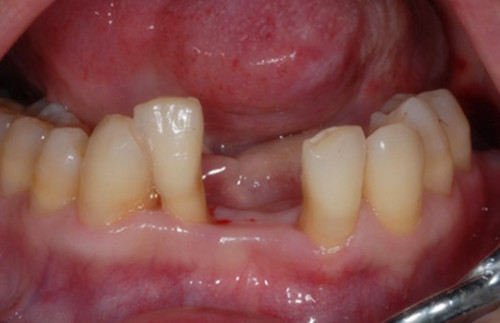
- Gum Recession: The gum height decreases, exposing the sensitive roots.
- Loose Teeth: As the bone disappears, teeth lose their anchor. They may become loose (ranging from slight movement to severe mobility) and can eventually shift out of place or fall off.
- Infection: The subgingival tissue becomes granulated and diseased. This often leads to pus discharge and persistent bad breath (halitosis).
How We Treat Periodontitis
The good news is that periodontitis can be managed if caught early. Here is the standard roadmap for treatment:
1. Diagnosis and Deep Cleaning
- X-Rays (Film Check): We start by taking X-rays to see how much bone has been lost and where the calculus is hiding under the gums.
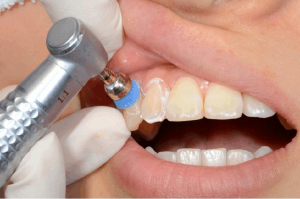
- Scaling: We perform a thorough cleaning to break off and remove the visible supragingival calculus.
- Subgingival Scraping (Root Planing): We go below the gumline to scrape away root calculus and remove infectious substances. This smooths the root surface, controls inflammation, and significantly reduces bleeding.
2. Surgical Intervention
If the periodontal pockets are very deep, a deep cleaning may not be enough. We may need to perform a minor surgery to access the root, cut away diseased tissue, and remove the remaining calculus.
- Post-Op Care: We often recommend a specialized mouthwash (such as Kin Gingival) to soothe the gums, speed up healing, and keep the area clean without the sting of alcohol.
3. Restoring Your Smile
Damage from periodontitis, such as bone loss, is often irreversible, but we can stabilize it:
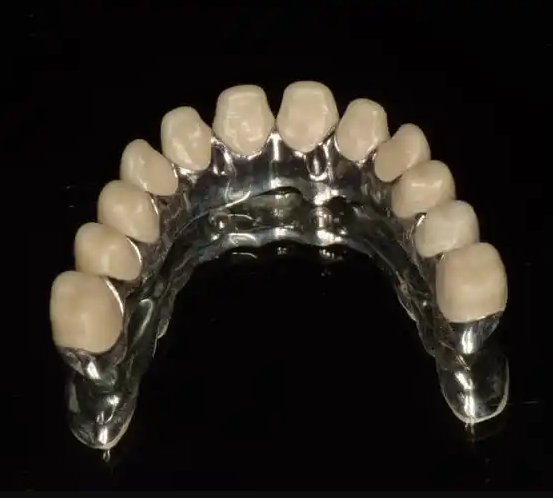
- Splinting: If teeth are loose, we can bond them together (periodontal splints) using permanent resin to hold them in place.
- Guided Tissue Regeneration (GTR): For severe cases, we may recommend this procedure to help regenerate lost bone and cover exposed tooth roots.
Conclusion: Don’t Wait
Periodontitis is prone to recurrence. Once your treatment is finished, the work isn’t over. You must maintain excellent oral hygiene by flossing daily and getting regular professional cleanings.
If your gums are bleeding, they are already inflamed. Do not wait for the pain to start. See your doctor early to stop the calculus from destroying the foundation of your smile.