
In today’s rapidly evolving dental landscape, the intersection of digital technology and traditional craftsmanship has revolutionized how we approach anterior dental restorations. This blog post explores the sophisticated workflow that combines cutting-edge digital processes with the irreplaceable human touch, focusing on the creation of beautiful, functional anterior crowns through the lens of a remarkable case study featuring vibrant, rainbow-colored anterior teeth.
Case Introduction: Where Technology Meets Artistry
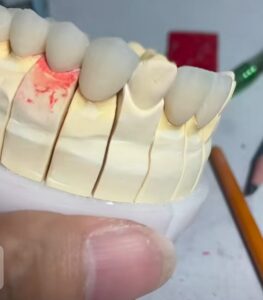
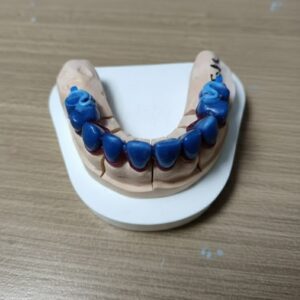
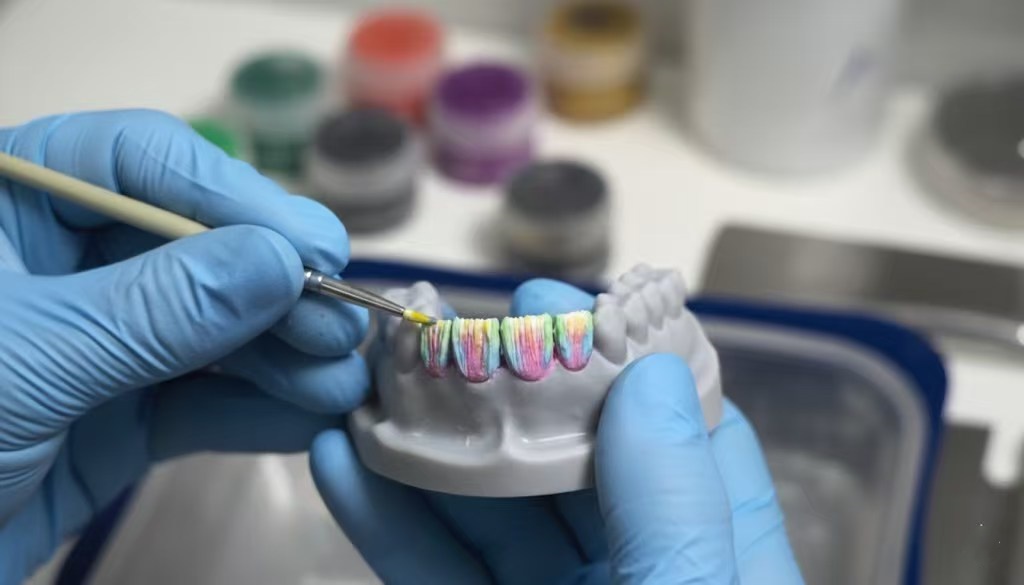
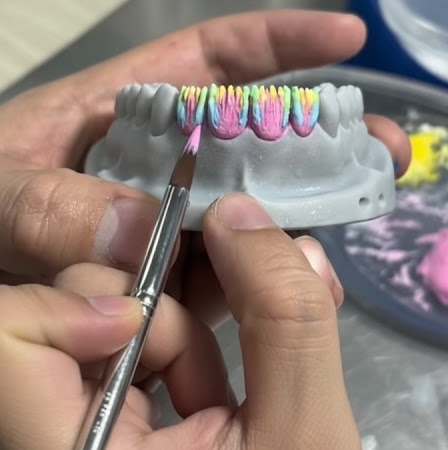
The image captures a pivotal moment in dental laboratory procedures where a skilled technician applies intricate internal staining to a set of anterior crowns. This particular case showcases the seamless integration of digital precision and manual layering artistry that defines contemporary dental laboratory work. The vibrant, multi-colored appearance of these anterior teeth demonstrates how modern dental laboratory materials and techniques can achieve both functional excellence and extraordinary aesthetic results.
The Comprehensive Laboratory Workflow
Digital Foundation: From Scan to Design
The journey begins with advanced digital technology that establishes the precise framework for the restoration:
- Digital Impression Acquisition: Using intraoral scanners to capture accurate 3D data of the patient’s oral cavity
- CAD Design: Computer-aided design software creates the optimal morphology and occlusal relationships
- 3D Printing: Resin models are produced for diagnostic and provisional purposes
- Material Selection: Determining the most suitable dental laboratory material for the specific clinical requirements
Manual Artistry: The Internal Staining Process
The true magic happens when human skill takes over to elevate the restoration from functional to exceptional:
| Step | Technique | Purpose |
|---|---|---|
| 1. Surface Preparation | Air abrasion and cleaning | Creates optimal bonding surface |
| 2. Dentin Staining | Layered application of dentin stains | Establishes natural tooth color foundation |
| 3. Enamel Layering | Strategic placement of enamel stains | Creates translucency and depth |
| 4. Effect Staining | Specialized effect stains | Adds character and individuality |
| 5. Glazing | Final ceramic layer | Enhances shine and protection |
This meticulous process requires exceptional hand-eye coordination, artistic vision, and deep understanding of dental anatomy and optical properties.
Material Selection: Zirconia vs. Lithium Disilicate
When crafting anterior restorations, material selection significantly impacts both longevity and aesthetics. While lithium disilicate press ingots have been popular, zirconia offers distinct advantages for modern anterior cases.
Why Zirconia Outperforms Lithium Disilicate for Anterior Applications
| Feature | Zirconia | Lithium Disilicate |
|---|---|---|
| Strength | Exceptional flexural strength (900-1200 MPa) | Good strength (400 MPa) |
| Aesthetics | Superior through-layer staining capability | Limited internal staining options |
| Biocompatibility | Excellent, no metal components | Excellent |
| Chipping Resistance | Higher resistance to chipping | Moderate resistance |
| Processing | CAD/CAM milling | Pressing or milling |
| Indications | High-stress anterior, bruxism patients | Low to moderate stress areas |
| Longevity | Proven long-term success | Good, but more technique-sensitive |
Zirconia’s superior strength makes it particularly suitable for anterior regions where patients may have parafunctional habits or higher occlusal forces. Its ability to accept comprehensive internal staining allows technicians to create truly natural-looking restorations that mimic the complex optical properties of natural teeth.
Lithium Disilicate Press: Ideal for Manual Layering
Contrary to common misconceptions, lithium disilicate press ingots are indeed ideal for manual internal layering techniques. The official documentation from Ivoclar’s IPS e.max Press system clearly outlines three processing methods:
IPS e.max Press Processing Options
| Method | Description | Ideal Applications |
|---|---|---|
| Staining | Simple staining of monolithic pressed restorations | Quick cases, minimal aesthetic requirements |
| Cut-back | Full anatomical pressing followed by 0.4-0.8mm facial/incisal reduction for manual layering | Standard anterior cases requiring enhanced aesthetics |
| Layering | Press MO/HO (medium/high opacity) ingots to create framework, then manually stack IPS e.max Ceram layers | Complex aesthetic cases demanding maximum natural appearance |
The Layering Process for Lithium Disilicate
The full manual layering technique involves:
- Framework Creation: Pressing MO/HO ingots to establish the basic restoration structure
- Dentin Layering: Manual application of dentin ceramic powders to establish the natural tooth color foundation
- Enamel Application: Strategic placement of enamel ceramics for translucency and light reflection
- Special Effects: Adding incisal translucency, mamelons, and other natural characteristics
- Characterization: Creating individualized effects like craze lines, white spots, and age-related discoloration
This comprehensive layering approach allows technicians to achieve exceptional aesthetic results that closely mimic natural tooth structure and optical properties.
The Artistic Imperative of Manual Layering in Customized Aesthetic Prostheses
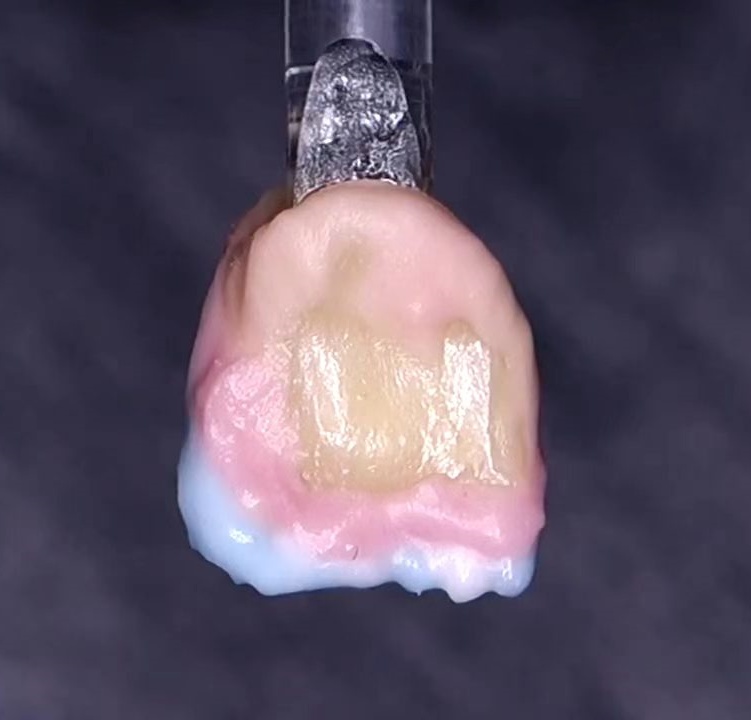
Manual layering represents the pinnacle of dental artistry, where technicians transform standardized materials into personalized masterpieces that capture each patient’s unique dental characteristics. This intricate process allows for the creation of restorations that mimic the complex optical properties of natural teeth, including depth, translucency, and individualized characterizations that digital systems alone cannot replicate. The technician’s skilled hands can adjust layer thickness, blend colors seamlessly, and add subtle effects that bring the prostheses to life, ensuring the final result appears naturally integrated within the patient’s dentition.
The importance of manual layering extends beyond mere aesthetics; it directly impacts the psychological comfort and confidence of patients who receive these customized prostheses. When a restoration exhibits the same variations, discolorations, and translucency patterns as natural teeth, patients experience a sense of authenticity and comfort that mass-produced alternatives simply cannot provide. This artistic approach also allows dental technicians to address specific patient concerns, such as matching adjacent teeth precisely or creating age-appropriate characteristics that enhance rather than detract from the patient’s overall appearance.
Modern Staining and Layering Materials: The Future of Dental Artistry
Unlike traditional powder and liquid systems that require precise mixing ratios, the new arrival of pre-formulated pastes offer consistent, reliable results every time. The comprehensive range includes full-spectrum shades categorized specifically for dentin, incisal, gingival, and final translucency applications, ensuring perfect matches for all porcelain-fused-to-metal and ceramic prostheses. Technicians can explore Dental Laboratorio‘ complete specification catalog online to discover how these advanced staining and glaze paste dental materials can streamline your workflow while delivering exceptional aesthetic outcomes.
The Future of Dental Laboratory Technology
As we look ahead, the integration of digital workflows with manual artistry will continue to evolve. Emerging technologies like artificial intelligence-assisted design and advanced ceramic materials will further enhance our capabilities. However, the human element—the technician’s skill, creativity, and artistic vision—will remain irreplaceable.
The case study featured in our image represents the perfect harmony between technological advancement and human craftsmanship. It demonstrates how modern dental laboratories can achieve results that were once unimaginable, creating restorations that not only function flawlessly but also bring joy and confidence to patients.
Close Thoughts
The art of dental laboratory work lies in the seamless integration of digital precision and manual mastery. By leveraging advanced technology while honoring traditional craftsmanship, dental technicians can create anterior restorations that are both scientifically sound and aesthetically exceptional. The rainbow-colored anterior teeth in our case study exemplify this philosophy, showcasing how the future of dentistry is bright, colorful, and infinitely creative.
As dental laboratory education continues to evolve, the emphasis must remain on developing technicians who are not just technically proficient with digital tools, but who also possess the artistic sensibility and manual layering skills to transform raw materials into works of art that enhance patients’ lives. The combination of zirconia’s material advantages with the technician’s artistic vision represents the pinnacle of modern dental laboratory excellence, while lithium disilicate press ingots offer an excellent alternative for cases where maximum aesthetic layering is required.