
In the evolving world of dentistry, patients and doctors often weigh the benefits of modern digital ceramic solutions against time-tested traditional methods. While digital workflows and all-ceramic materials are popular for their aesthetics, traditional Porcelain Fused to Metal (PFM) prostheses remain the gold standard in specific clinical situations.
When Traditional PFM is Superior to Digital Ceramic
While digital ceramics offer incredible cosmetic translucency, there are cases where traditional PFM is the better clinical choice:
- Long-Span Bridges: When replacing a gap of three or more teeth, the flexural strength required is significant. The metal substructure in PFM provides superior rigidity compared to many monolithic digital ceramics, preventing fracture under heavy occlusal loads.
- Limited Occlusal Space: In patients with a deep bite or limited vertical space, the thickness required for all-ceramic materials might not be feasible. PFM can be fabricated thinner while maintaining strength.
- Severe Bruxism: For patients who grind their teeth (bruxers), the metal framework of a PFM acts as a durable shock absorber, reducing the risk of chipping compared to brittle ceramics.
Behind the Scenes: How Prosthetics are Fabricated
Many patients wonder what happens after the dentist captures their impression. The fabrication process is a precise collaboration between the dental office and the laboratory, often involving the “wax-lost casting” technique.
Here is the step-by-step journey:
- Impression Transfer: The dentist captures the patient’s oral structure using a physical impression or a digital scan, sending the model to the laboratory.
- The Wax-Up: A lab technician creates a wax pattern of the restoration based on the model.
- Lost-Wax Casting: The wax pattern is encased in an investment material. When heated, the wax melts away (hence “lost-wax”), leaving a mold.
- Alloy Casting: Molten metal is forced into the mold. For high-strength prosthetics, dental cobalt chrome alloy is the material of choice due to its excellent rigidity and biocompatibility.
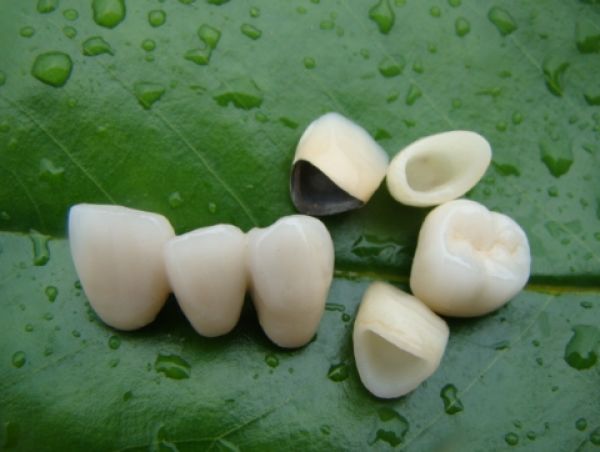
- Porcelain Layering: Once the metal substructure (copings) is cast, the technician applies layers of porcelain powder. These layers are built up to mimic the natural anatomy and translucency of the tooth, then fired in a ceramic oven.
The use of dental cobalt chrome alloy ensures that the prosthesis has a strong foundation that resists deformation, while the porcelain overlay provides the necessary aesthetic appeal.
Patient FAQ: Longevity, Maintenance, and Implants
How long can porcelain teeth last?
Under normal circumstances, a well-made porcelain prosthesis can last for about 10 years. However, this longevity relies on three critical factors:
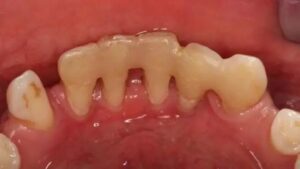
- Preparation: The dentist must grind the tooth correctly—just enough to hold the crown, but not so deep that it exposes the pulp (nerve).
- Bonding: The crown must be tightly bonded to the tooth structure.
- Material Selection:
- All-Ceramic(lithium disilicate press ingot): Excellent for aesthetics and gum health.
- PFM (Metal): Strong, but there is a risk of the porcelain layer “collapsing” or chipping over time if the bite is not perfectly aligned.
Are porcelain teeth easy to fall off?
Generally, the strength of modern dental adhesives is sufficient to keep the crown in place for years without issue. However, problems can arise:
- Wear and Tear: After years of chewing, the bond may weaken. You might feel the porcelain tooth becoming loose.
- Consequences of Delay: If you feel a gap or movement, do not ignore it. If a gap forms, bacteria can enter, causing the abutment (the supporting tooth) to rot.
- Repair: If the crown falls out and the abutment is healthy, a dentist can often re-bond it.
*Note on Bridges:* If you are missing a tooth, a bridge involves grinding down two adjacent teeth to support the prosthesis. Ideally, no more than two teeth should be used as anchors (abutments) to ensure the lifespan of the bridge is not compromised.
Porcelain Teeth vs. Dental Implants: Which is better?
The choice depends on the long-term health of your mouth.
The Case for Bridges (Porcelain Teeth):
- This involves modifying existing teeth. For a single crown or to protect a tooth after a root canal, this is an excellent solution.
- The Downside: To replace a missing tooth, you must sacrifice enamel on the adjacent healthy teeth. The bridge itself has no root; it relies on the neighboring teeth.
The Case for Dental Implants:
- Preservation: Implants do not require grinding down adjacent teeth.
- Durability: With good periodontal conditions (healthy gums and sufficient bone mass), implants can last 15 to 20 years or more.
- Requirements: You need sufficient bone volume and good physical health. The procedure is more technically difficult and costly than a bridge, but it offers the best long-term solution for missing teeth.
Maintenance: The Key to Success
Whether you choose PFM, all-ceramic, or implants, maintenance is non-negotiable.
- The “Vacuum” Seal: If installed properly, the inside of the crown is sealed against the tooth. Food residues cannot enter as long as the bond holds.
- Hygiene: You must floss diligently. Pay special attention to the gum edge and the spaces between teeth (interdental areas). Plaque builds up easily here, leading to calculus formation.
- Diet: Avoid biting hard foods (like ice or nuts) frequently, as this can loosen the restoration.
Final Note: How long your porcelain teeth last depends mainly on the doctor’s technique during placement and your daily maintenance. If it is installed properly and cared for, it is not easy to fall off, giving you years of confident smiles.