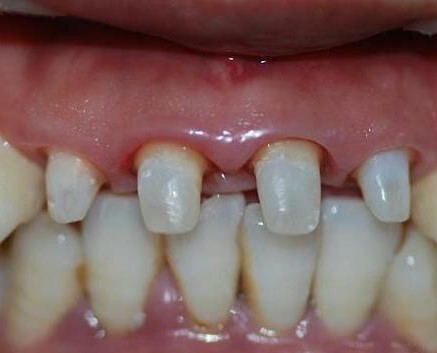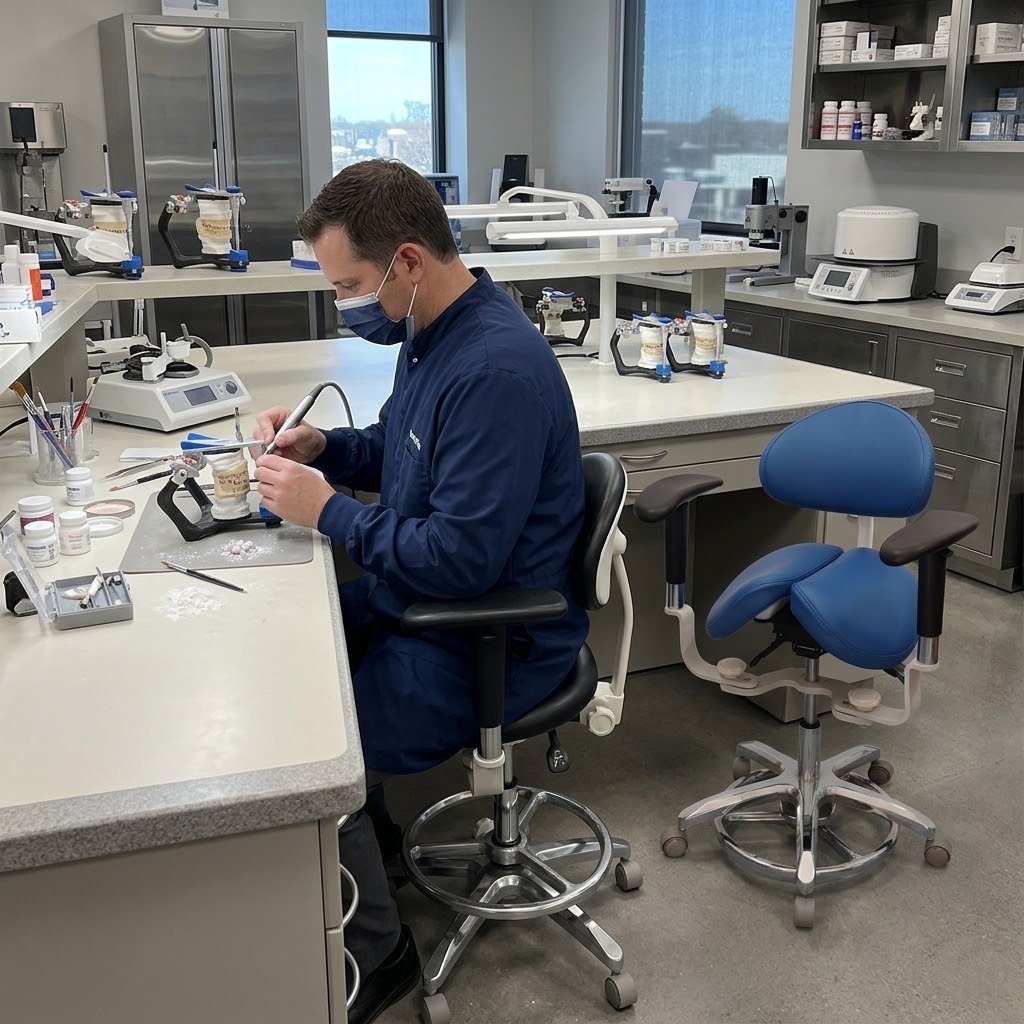
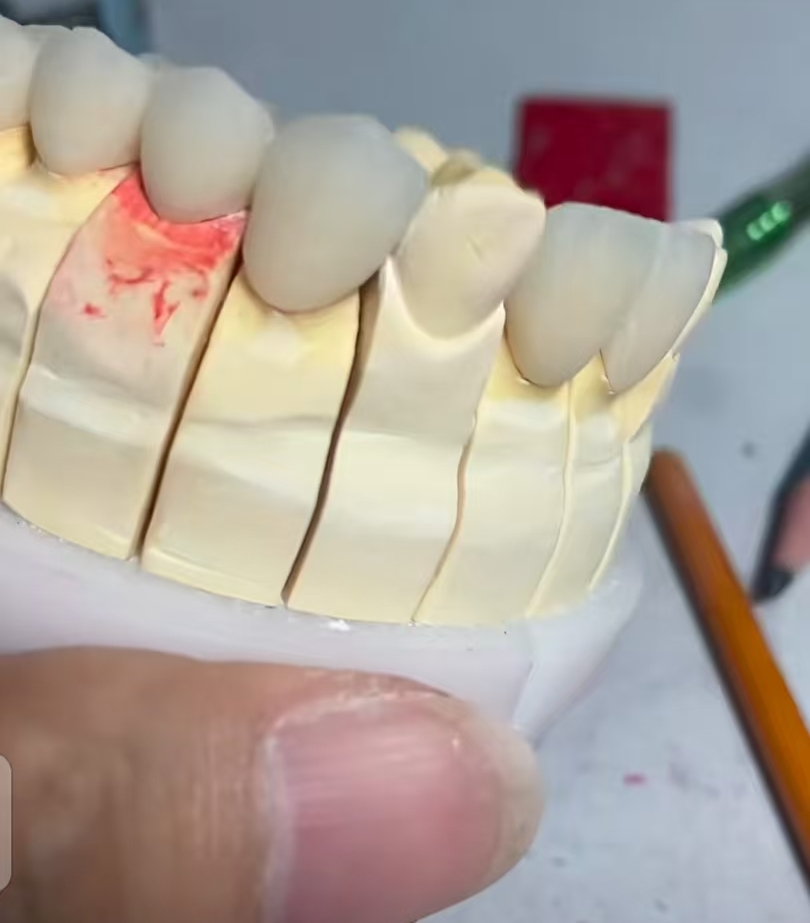

In the field of dental restoration, model fabrication serves as the crucial bridge connecting clinical practice with dental laboratory work. With the rapid advancement of digital technology, traditional methods of creating gypsum models are facing challenges from emerging technologies like 3D resin printing. This article will delve into the advantages and disadvantages of these two model fabrication approaches, while also comparing CAD/CAM zirconia prostheses with traditional wax-lost PFM (Porcelain-Fused-to-Metal) restorations.
Traditional Model Fabrication: Die Stone + Pindex System + Laser Saw Cutting
Traditional dental model fabrication has been employed for decades, with its core involving the use of high-quality gypsum materials to create precise oral models, which are then segmented using the Pindex system.
Workflow
- Impression Taking: Using materials like silicone rubber to obtain patient oral impressions
- Model Pouring: Pouring specialized gypsum into the impression
- Hardening: Allowing the gypsum to fully harden
- Laser Cutting: Precisely segmenting the model using the Pindex laser system
Advantages Analysis
| Feature | Traditional Method |
|---|---|
| Precision | High precision, long-term validation |
| Cost | Lower initial equipment investment |
| Operation | Technicians are familiar, gentle learning curve |
| Stability | Material stability, resistance to deformation |
| Segmentation Effect | Clean laser-cut edges, no damage to restorations |
Case Analysis: Gypsum Model + Laser Cutting
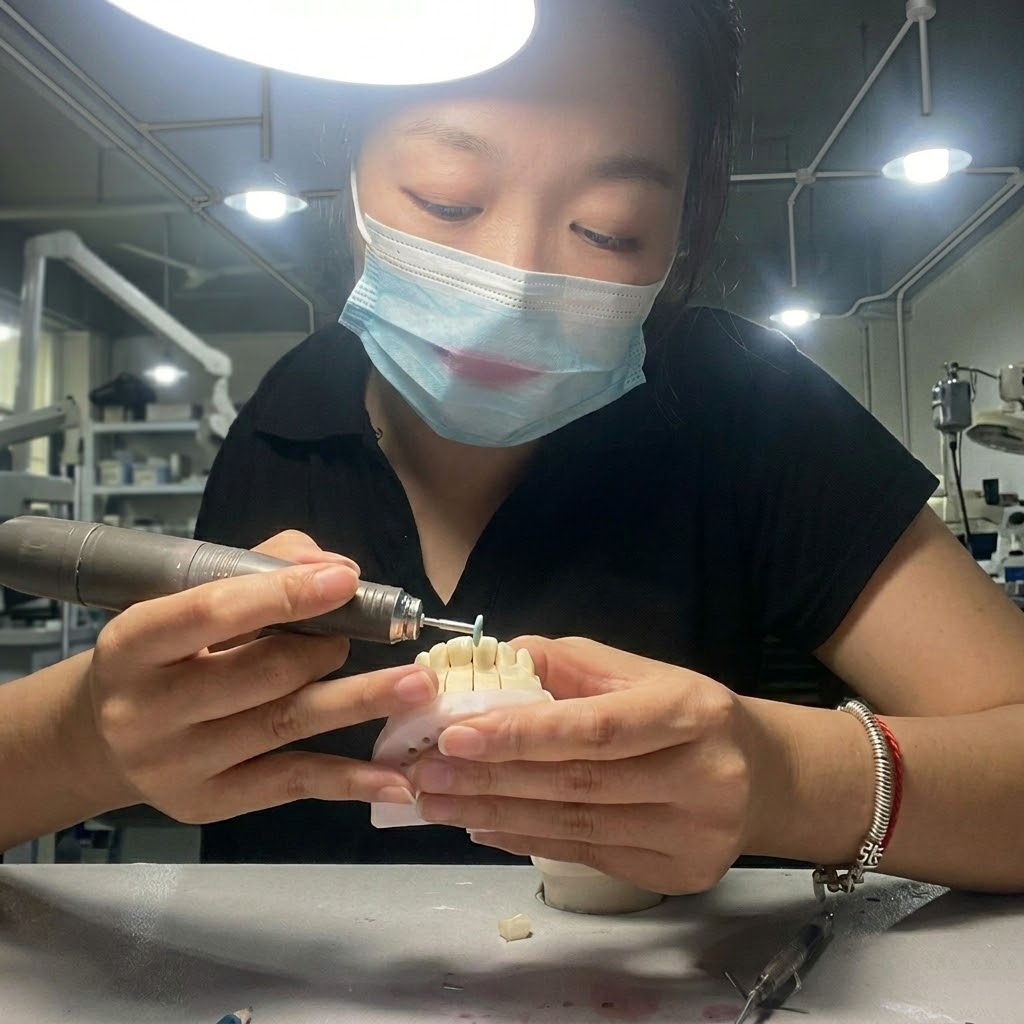
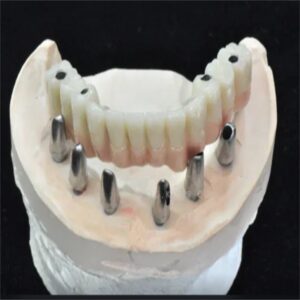
As shown in the image, this traditional fabrication method segments the model into independent units through laser cutting, facilitating technicians to handle each tooth individually. The advantages of this segmentation approach include:
- Independent Operation: Each tooth unit can be handled separately, allowing for fine adjustments
- Edge Protection: Laser cutting does not damage the margins of restorations
- Easy Inspection: Each tooth can be individually checked for fit and occlusion
- Error Reduction: Segmentation enables more precise individual adjustments
The Dental Die Stone Materials Plays Important Role In Model Fabrication
Dental die stone material plays a crucial role in the Pindex positioning system and laser saw cutting procedures, directly affecting the precision and quality of model segmentation. Technicians must carefully select from Type 2 to Type 4 die stones, where Type 2 serves as the standard for regular model bases, while Type 3 and Type 4 offer increased hardness for more demanding applications. Particularly for custom abutment design and implant work, super hardness Type 4 die stone becomes essential due to its superior strength and dimensional stability. These specialized materials come in various colors and formulations, each engineered to meet specific laboratory requirements. For a comprehensive understanding of all available dental die stone types, colors, and their specific applications, dental professionals are encouraged to explore specialized dental supply resources that detail the unique properties and recommended uses for each classification.
3D Resin Printing: Digital Model Fabrication
With the development of 3D printing technology, resin-printed models are gradually replacing traditional gypsum models, becoming the new choice for dental laboratories.
Workflow
- Digital Scanning: Using intraoral scanners to obtain digital impressions
- Model Design: Designing models in CAD software
- 3D Printing: Printing models using resin materials
- Post-processing: Cleaning and curing the model
Advantages Analysis
| Feature | 3D Resin Printing |
|---|---|
| Efficiency | Rapid production, reduced manual operations |
| Precision | Digital precision, high repeatability |
| Design Flexibility | Can directly design segmented independent units |
| Material Properties | Lightweight, less prone to breakage |
| Integration | Easy integration with digital workflows |
Case Analysis: 3D Resin Printed Model
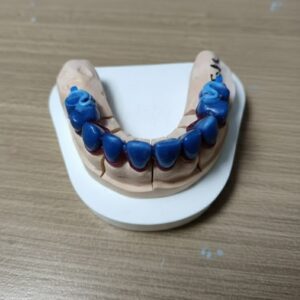
In 3D resin-printed models, the structure can be designed to include independently segmented units, with each tooth unit directly removable from the model base, facilitating technicians to operate independently. The advantages of this method include:
- Integrated Design: Digital models can directly incorporate segmentation design
- Reduced Procedures: No need for subsequent laser cutting steps
- Design Optimization: Can optimize the removal method for each unit
- Digital Archiving: Easy to store and reuse
CAD/CAM Zirconia Prostheses vs. Wax-Lost PFM Restoration
In prosthesis fabrication, CAD/CAM zirconia prostheses and traditional wax-lost PFM restorations represent two different technical approaches.
CAD/CAM Zirconia Prostheses
Advantages:
- Aesthetic Effect: All-ceramic materials, excellent light transmission
- Biocompatibility: No metal components, reducing allergic reactions
- Precision: Digital design, high precision
- Efficiency: Rapid fabrication, reducing patient visits
Limitations:
- Cost: Higher equipment investment
- Material Limitations: May not be suitable for certain complex situations
Wax-Lost PFM Restoration
Advantages:
- Strength: Metal substructures provide good support
- Cost: Relatively low
- Technical Maturity: Long-term clinical validation
Limitations:
- Aesthetics: Metal margins may affect appearance
- Biocompatibility: May cause allergic reactions
- Complex Operations: Multi-step process, prone to errors
Comparative Analysis
Model Fabrication Method Comparison
| Feature | Traditional Gypsum Model | 3D Resin Printing |
|---|---|---|
| Precision | High, experience-dependent | Digital precision |
| Efficiency | Slower, more manual operations | Rapid, automated |
| Cost | Low material costs | High equipment investment |
| Segmentation | Requires subsequent laser cutting | Can directly design segmentation |
| Integration | Separated from digital workflow | Easy digital integration |
Prosthesis Fabrication Method Comparison
| Feature | CAD/CAM Zirconia | Wax-Lost PFM |
|---|---|---|
| Aesthetics | Excellent, all-ceramic materials | Limited, metal margins |
| Biocompatibility | Good | May cause allergies |
| Precision | Digital design | Experience-dependent |
| Strength | Good | Excellent |
| Cost | Higher | Relatively lower |
Close Thoughts
Although traditional gypsum model fabrication methods are mature and reliable, they have limitations in efficiency and digital integration. 3D resin printing technology represents the future direction of dental laboratories, offering higher efficiency, better digital integration, and more flexible design options.
In prosthesis fabrication, CAD/CAM zirconia prostheses are gradually replacing traditional wax-lost PFM restorations due to their excellent aesthetic effects and biocompatibility, especially in anterior tooth cosmetic restoration.
However, each technology has its applicable scenarios. Traditional methods still have value in cost-sensitive and experienced laboratories, while digital methods excel in environments pursuing efficiency and innovation. The future of dental laboratories lies in combining the advantages of both technologies, selecting the most appropriate solutions based on specific case requirements.
With continuous technological advancements, we can anticipate that dental model fabrication and prosthesis restoration will become more precise, efficient, and personalized, providing patients with better treatment experiences.