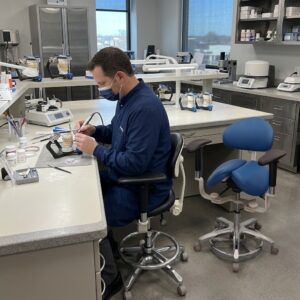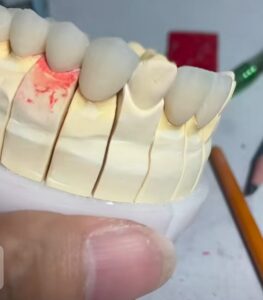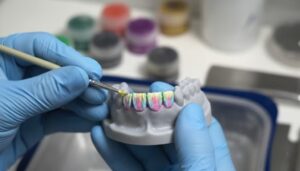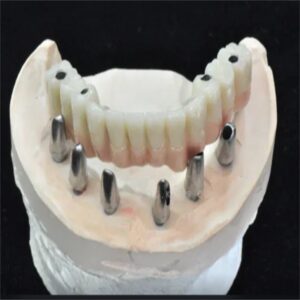
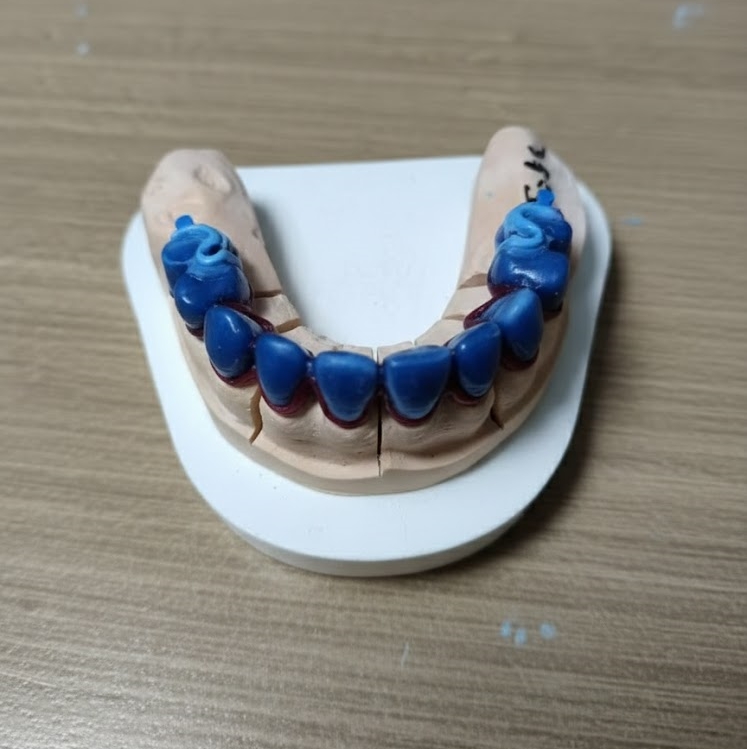

Bilateral ledge attachment systems represent a sophisticated solution in removable prosthodontics, offering enhanced retention, stability, and aesthetics compared to traditional clasp designs. This laboratory technique focuses on creating precision attachments through meticulous hand-carved wax-up procedures, utilizing cobalt Chrome alloy for optimal mechanical properties and biocompatibility.
Case Presentation
A 65-year-old patient requiring complete maxillary and mandibular denture rehabilitation presents with moderate ridge resorption and desire for improved prosthesis retention. The treatment plan incorporates bilateral ledge attachments to distribute occlusal forces evenly while providing secure retention.
Procedure Workflow
1. Diagnostic and Planning Phase
- Comprehensive oral examination and diagnostic cast fabrication
- Ridge mapping and assessment of available interarch space
- Attachment placement planning with 6-8° path of insertion
2. Master Cast Preparation
- Definitive cast fabrication using high-strength stone
- Ridge modification and blockout procedures
- Attachment housing preparation using parallelometer
3. Hand-Carved Wax-Up Construction
- Precision wax carving of bilateral ledge components
- Attachment housing formation with 20-30μm clearance
- Verification of path of insertion and retention mechanism
4. Spruing and Investment
- Strategic sprue placement for optimal metal flow
- Wax assembly to casting ring
- Investment material mixing and vacuum investment
5. Casting Process
- Dental crucible preparation and preheating
- Wax elimination in furnace following specific temperature curve
- Melting cobalt Chrome alloy in dental crucible at 1500°C
- Centrifugal casting using vacuum/pressure casting machine
- Second heating of dental crucible for alloy refinement
6. Finishing and Polishing
- Devesting and initial cleanup
- Precision adjustment of ledge components
- Polishing to mirror finish for biocompatibility
7. Try-in and Final Processing
- Clinical verification of fit and retention
- Acrylic resin denture base processing
- Final occlusal refinement and polishing
Materials Table
| Component | Material Type | Key Properties |
|---|---|---|
| Attachment Framework | Cobalt Chrome Alloy | High strength, corrosion resistance, biocompatibility |
| Investment Material | Phosphate-bonded | Precision expansion control, thermal stability |
| Casting Dental Crucible | High-temperature ceramic | Thermal shock resistance, purity maintenance |
| Wax Pattern | Pattern wax | Excellent flow, clean burnout |
| Polishing Agents | Diamond abrasives | Surface refinement, luster enhancement |
Clinical Advantages
The bilateral ledge design offers several benefits:
- Enhanced Aesthetics: Eliminates visible metal clasps
- Improved Retention: Precision mechanical lock provides secure retention
- Force Distribution: Bilateral design distributes occlusal forces evenly
- Patient Comfort: Smooth, polished surfaces reduce tissue irritation
- Durability: Cobalt Chrome alloy ensures long-term serviceability
Dental Alloys: Review for Precision Casting
If you are running a modern dental laboratory, selecting the right dental alloy is critical for ensuring the success of your restorations. Whether you are fabricating traditional cobalt chrome removable partial dentures or high-precision implant-supported bars, the material quality dictates the fit, biocompatibility, and longevity of the final product.
Why the Right Dental Alloy Matters
A high-quality dental alloy must possess a balance of strength, corrosion resistance, and compatibility with oral tissues. Laboratories must choose materials that minimize casting defects and ensure easy polishing without compromising mechanical integrity. For labs looking to optimize production, sourcing reliable dental alloy is the first step toward efficiency.
Precision Casting: Cobalt Chrome Dental Alloy
For the hand-carved wax-up techniques discussed earlier—such as the bilateral ledge attachment design—traditional casting remains the gold standard.
Cobalt Chrome (Co-Cr) is the workhorse of the dental laboratory due to its:
- Exceptional Hardness: High resistance to wear, making it ideal for frameworks and clasp assemblies.
- Modulus of Elasticity: Allows for thinner, lighter clasps that still retain their shape, providing patient comfort.
- Cost-Effectiveness: Offers superior performance at a fraction of the cost of high-noble gold alloys.
Using high-quality dental investment material is crucial to maintaining the mold’s structural stability during the wax-lost casting process. This rigidity ensures that the dental investment material does not crack or distort, guaranteeing precise metal prostheses.
The Essential Role of Dental Crucible in Alloy Casting
The dental crucible serves as a vital tool in the alloy casting procedure, specifically engineered to contain molten metals. Its robust ceramic structure is resistant to the high temperature environment required for melting dental alloy safely and efficiently.
Beyond casting, laboratory sintering of ceramic materials also utilizes a specially designed dental crucible that differs from the standard fabrication manner. These specialized vessels ensure optimal thermal performance for various dental applications.
Visit here to explore the extensive dental crucibles resource and find the perfect match for your laboratory needs.
Conclusion
This hand-carved bilateral ledge attachment technique demonstrates the intersection of artistic craftsmanship and scientific precision in dental laboratory technology. The meticulous wax-up process, combined with advanced cobalt Chrome alloy casting using specialized dental crucible, results in prostheses that offer superior function and patient satisfaction. This approach represents the pinnacle of removable prosthodontic design, where traditional craftsmanship meets modern materials science.