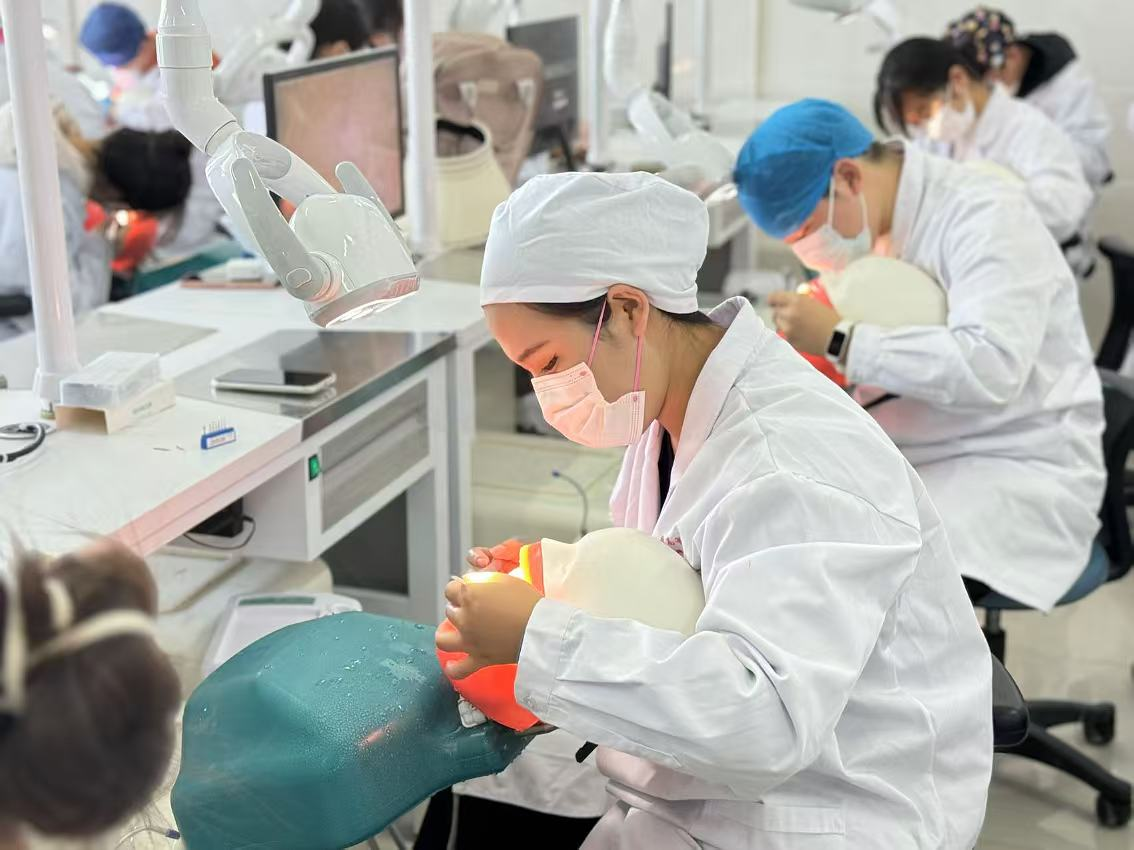

Welcome to the dental simulation laboratory—the bridge between theoretical textbooks and the real-world operatory. For dental students, this lab is a safe haven where mistakes are lessons and skills are forged. Amidst the rows of phantom heads and artificial jaws, one instrument reigns supreme as the primary extension of the dentist’s hand: the high speed handpiece.
Understanding this tool is the first step in mastering pre-clinical dentistry. In the simulation lab, you will encounter various training models ranging from standard adult dentoforms to specialized surgical blocks. Here is how to navigate this environment and utilize your equipment effectively.
The Workhorse: The High Speed Handpiece
The high speed handpiece is arguably the most frequently used instrument in dentistry. In the simulation lab, you will use it to cut tooth structure, remove caries, and refine preparations. Unlike the slow-speed motors used for polishing or endodontics, the high-speed handpiece relies on air-driven turbines or electric motors to rotate burs at incredible speeds (up to 400,000 RPM).
Because you are working on artificial resin or plastic teeth in the lab, it is crucial to understand how the handpiece interacts with different materials. The “feel” of cutting a plastic typodont differs from natural enamel, but the principles of water spray cooling and light, tactile pressure remain the same.
Classifying the Tools
In the lab, you will not just pick up “the drill.” You must select the correct handpiece for the specific simulation task. Below is a guide to the types you will encounter.
*Classification of High Speed Handpieces in Simulation*
| Type | Drive Mechanism | Key Features | Primary Use in Simulation |
|---|---|---|---|
| Standard Air-Turbine | Compressed Air | High-pitched sound, variable speed depending on pressure | General crown prep, class II cavities on standard models. |
| Electric Motor Handpiece | Electric Motor (1:5) | Constant torque, silent operation, steady speed | Ideal for precise crown preparations requiring smooth finishing. |
| Surgical Handpiece | Air or Electric | 45-degree angled head, internal or external irrigation | Osteotomy (bone cutting) and sectioning teeth on surgical jaw models. |
Applying Skills to Training Models
The simulation lab is stocked with various models designed to mimic specific clinical scenarios. Your choice of handpiece changes depending on which model is sitting in the phantom head.
*Dental Training Purpose and Handpiece Selection*
| Training Model | Clinical Scenario | Handpiece & Bur Selection | Objective |
|---|---|---|---|
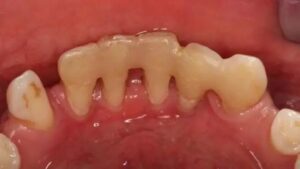
| Standard 28-Tooth Model | Prosthodontics (Crown & Bridge) | High Speed Handpiece with Round Diamond (depth grooves) followed by Tapered Diamond. | Practicing axial reduction, occlusal reduction, and margin finish lines. |
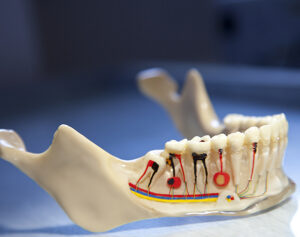
| Endodontic Block | Root Canal Therapy | High Speed Handpiece (for access) -> Endo Micromotor (for shaping). | Creating access cavities; transitioning to low-speed files for canal cleaning. |
| Surgical Implant Model | Impacted Wisdom Tooth | 45-degree Surgical High Speed with Surgical Carbide Bur. | Practicing bone removal and tooth sectioning without causing soft tissue emphysema. |
Beyond the High Speed: A Brief Look at Other Procedures
While the high speed handpiece is your main tool for cutting, the simulation lab also introduces you to the delicate work of endodontics and implantology.
When practicing root canal therapy on clear resin blocks, you start with the high speed handpiece to create an access opening into the pulp chamber. However, once inside, you must switch to the endodontic motor. This requires a shift in mindset from aggressive cutting to delicate, tactile navigation of the root canal system.
For implant training, the procedure becomes even more specialized. After using a surgical high speed handpiece to prepare the site (simulating osteotomy), you switch to an implant motor with extremely low speed (15-20 RPM) but high torque to place the implant fixture. This teaches you the critical difference between speed (cutting) and torque (placing).
Conclusion
The dental simulation laboratory is where you develop the muscle memory that will define your career. Mastering the high speed handpiece—respecting its speed, managing its water spray, and selecting the right bur for the right model—is the foundation of your training. Treat every session on the phantom head as if it were a real patient, and you will be well-prepared for clinic.